If you are looking for high-quality products, please feel free to contact us and send an inquiry, email: brad@ihpa.net
Intro: Key gadgets in power electronics
Silicon-controlled rectifiers (SCRs), additionally referred to as thyristors, are semiconductor power gadgets with a four-layer three-way joint structure (PNPN). Given that its introduction in the 1950s, SCRs have actually been commonly made use of in commercial automation, power systems, home device control and other areas as a result of their high hold up against voltage, big current carrying capability, rapid response and easy control. With the advancement of technology, SCRs have developed into lots of types, including unidirectional SCRs, bidirectional SCRs (TRIACs), turn-off thyristors (GTOs) and light-controlled thyristors (LTTs). The distinctions in between these types are not only shown in the framework and functioning concept, yet additionally establish their applicability in various application circumstances. This post will certainly begin with a technological perspective, combined with details parameters, to deeply evaluate the main distinctions and common uses of these 4 SCRs.
Unidirectional SCR: Basic and steady application core
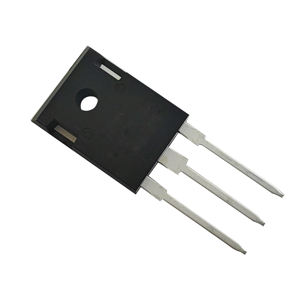
Unidirectional SCR is one of the most basic and usual kind of thyristor. Its structure is a four-layer three-junction PNPN plan, including 3 electrodes: anode (A), cathode (K) and gate (G). It only enables current to flow in one instructions (from anode to cathode) and switches on after the gate is set off. As soon as turned on, also if the gate signal is eliminated, as long as the anode current is more than the holding present (normally less than 100mA), the SCR remains on.
(Thyristor Rectifier)
Unidirectional SCR has strong voltage and present tolerance, with an ahead repeated top voltage (V DRM) of as much as 6500V and a ranked on-state average present (ITAV) of approximately 5000A. For that reason, it is extensively made use of in DC electric motor control, commercial heating systems, uninterruptible power supply (UPS) correction parts, power conditioning gadgets and other celebrations that require continual transmission and high power handling. Its advantages are basic framework, inexpensive and high dependability, and it is a core part of numerous standard power control systems.
Bidirectional SCR (TRIAC): Perfect for air conditioning control
Unlike unidirectional SCR, bidirectional SCR, likewise called TRIAC, can achieve bidirectional conduction in both favorable and negative half cycles. This structure contains 2 anti-parallel SCRs, which permit TRIAC to be triggered and turned on at any moment in the AC cycle without changing the circuit link approach. The balanced conduction voltage variety of TRIAC is generally ± 400 ~ 800V, the optimum load current is about 100A, and the trigger current is less than 50mA.
Because of the bidirectional transmission attributes of TRIAC, it is particularly ideal for air conditioning dimming and rate control in home devices and customer electronics. For example, gadgets such as lamp dimmers, follower controllers, and ac unit fan speed regulators all count on TRIAC to achieve smooth power policy. On top of that, TRIAC additionally has a lower driving power need and is suitable for incorporated style, so it has been extensively made use of in clever home systems and tiny devices. Although the power thickness and changing rate of TRIAC are not just as good as those of brand-new power devices, its affordable and hassle-free use make it a crucial player in the area of small and medium power a/c control.
Gateway Turn-Off Thyristor (GTO): A high-performance representative of active control
Gate Turn-Off Thyristor (GTO) is a high-performance power gadget developed on the basis of conventional SCR. Unlike ordinary SCR, which can just be shut off passively, GTO can be shut off actively by using an unfavorable pulse existing to the gate, hence attaining even more flexible control. This attribute makes GTO perform well in systems that call for constant start-stop or rapid action.
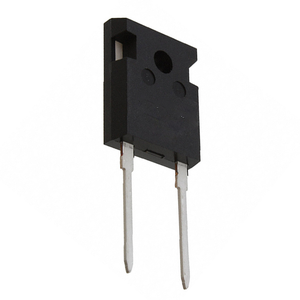
(Thyristor Rectifier)
The technical criteria of GTO reveal that it has very high power handling capability: the turn-off gain is about 4 ~ 5, the maximum operating voltage can reach 6000V, and the maximum operating current depends on 6000A. The turn-on time is about 1μs, and the turn-off time is 2 ~ 5μs. These performance signs make GTO widely utilized in high-power scenarios such as electrical locomotive traction systems, big inverters, industrial electric motor frequency conversion control, and high-voltage DC transmission systems. Although the drive circuit of GTO is relatively complex and has high changing losses, its performance under high power and high vibrant reaction demands is still irreplaceable.
Light-controlled thyristor (LTT): A reputable selection in the high-voltage isolation setting
Light-controlled thyristor (LTT) uses optical signals rather than electrical signals to set off transmission, which is its largest feature that identifies it from various other sorts of SCRs. The optical trigger wavelength of LTT is usually between 850nm and 950nm, the reaction time is gauged in split seconds, and the insulation level can be as high as 100kV or above. This optoelectronic seclusion device significantly boosts the system’s anti-electromagnetic interference capability and security.
LTT is mostly utilized in ultra-high voltage direct current transmission (UHVDC), power system relay security devices, electro-magnetic compatibility defense in medical equipment, and army radar communication systems and so on, which have incredibly high needs for security and stability. As an example, many converter terminals in China’s “West-to-East Power Transmission” project have adopted LTT-based converter valve components to make sure secure procedure under exceptionally high voltage problems. Some advanced LTTs can also be integrated with gateway control to accomplish bidirectional conduction or turn-off functions, further expanding their application range and making them an excellent option for addressing high-voltage and high-current control problems.
Vendor
Luoyang Datang Energy Tech Co.Ltd focuses on the research, development, and application of power electronics technology and is devoted to supplying customers with high-quality transformers, thyristors, and other power products. Our company mainly has solar inverters, transformers, voltage regulators, distribution cabinets, thyristors, module, diodes, heatsinks, and other electronic devices or semiconductors. If you want to know more about , please feel free to contact us.(sales@pddn.com)
All articles and pictures are from the Internet. If there are any copyright issues, please contact us in time to delete.
Inquiry us