If you are looking for high-quality products, please feel free to contact us and send an inquiry, email: brad@ihpa.net
Introduction to Boron Nitride Ceramics: A Distinct Course of High-Tech Materials
Boron nitride ceramic products have actually emerged as an essential class of sophisticated porcelains, differentiated by their distinct combination of thermal conductivity, electrical insulation, chemical inertness, and mechanical stability at extreme temperatures. Unlike traditional oxide or carbide-based porcelains, boron nitride (BN) exists in multiple crystalline kinds– most significantly hexagonal (h-BN), cubic (c-BN), and wurtzite (w-BN)– each offering distinct properties fit for specialized applications. From high-temperature crucibles to semiconductor elements and quantum devices, BN ceramics are redefining efficiency borders throughout sectors varying from aerospace to microelectronics.
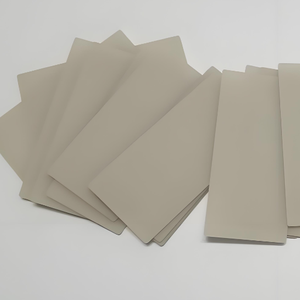
(Boron Nitride Ceramic)
Architectural Features and Polymorphic Variants of Boron Nitride Ceramics
The versatility of boron nitride stems from its ability to embrace different crystal structures, each with tailored physical and chemical features. Hexagonal boron nitride (h-BN), typically referred to as “white graphite,” includes a layered structure that imparts exceptional lubricity, reduced rubbing, and high thermal conductivity while keeping electrical insulation. Cubic boron nitride (c-BN), 2nd just to ruby in hardness, is widely made use of in cutting tools and rough applications. Wurtzite BN (w-BN) shows piezoelectric residential or commercial properties, making it appropriate for high-pressure sensing units and optoelectronic tools. These polymorphs allow the layout of extremely specialized ceramic products adapted to demanding commercial environments.
Manufacturing Techniques and Product Difficulties
Producing premium boron nitride ceramic items includes exact powder synthesis, shaping, and sintering strategies. h-BN is commonly made through warm pushing or stimulate plasma sintering, while c-BN requires high-pressure, high-temperature (HPHT) techniques to support its cubic phase. Accomplishing thick, defect-free BN ceramics remains a challenge because of the product’s naturally reduced self-diffusivity and propensity toward porosity. Additives such as yttria or alumina are usually presented to boost densification without compromising thermal or electrical performance. Recurring research concentrates on additive manufacturing, nanostructuring, and crossbreed composites to increase the series of possible geometries and functionalities.
Applications in Electronic Devices, Semiconductors, and Thermal Management Systems
One of the most considerable functions of boron nitride ceramic products hinges on the electronic devices and semiconductor fields, where thermal administration and electrical isolation are paramount. h-BN substratums are progressively made use of in power modules, RF components, and LED packages due to their remarkable thermal conductivity and dielectric residential properties. In semiconductor crystal development processes– such as Czochralski drawing or directional solidification– BN crucibles make sure contamination-free thaw handling. In addition, thin-film BN layers function as diffusion obstacles and passivation finishes in incorporated circuits, improving device integrity under severe operating problems.
Use in Aerospace, Protection, and Nuclear Technologies
Boron nitride ceramic items also play an important role in aerospace, defense, and nuclear energy systems. Their neutron-absorbing capacities make them perfect for control poles and shielding products in atomic power plants. In hypersonic flight and area exploration, BN compounds offer lightweight, thermally steady components capable of holding up against re-entry temperatures surpassing 2000 ° C. Military applications consist of radar-transparent radomes, projectile nose cones, and armor-piercing penetrators made from c-BN-reinforced ceramics. As national safety and security and room sectors evolve, demand for BN-based materials is expected to grow significantly.
Innovations in Mechanical and Commercial Handling Tools
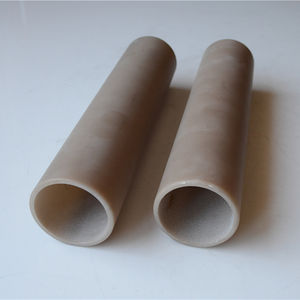
( Boron Nitride Ceramic)
Cubic boron nitride (c-BN) has actually reinvented machining and metalworking markets due to its outstanding solidity and thermal stability. c-BN cutting devices exceed traditional tungsten carbide and also some ruby tools when machining ferrous alloys, as they do not chemically respond with iron at heats. This makes them essential in auto and aerospace production, where accuracy and device long life are essential. Innovations in covering modern technologies and composite tool styles remain to push the limits of c-BN’s performance, allowing quicker machining rates and expanded tool life in high-volume manufacturing settings.
Environmental and Economic Considerations
In spite of their high-performance advantages, boron nitride ceramic products face financial and ecological challenges. Production costs stay elevated because of complicated synthesis paths and restricted economic situations of scale compared to more established technical ceramics like silicon nitride or light weight aluminum oxide. Reusing and end-of-life disposal techniques are still in early development, though passion in round manufacturing designs is growing. Researchers are exploring alternative raw material resources, bio-derived binders, and reusable mold and mildew technologies to decrease the ecological footprint of BN ceramic production while boosting price competition.
Market Patterns and Worldwide Market Expansion
The global market for boron nitride ceramic products is experiencing stable growth, driven by enhancing demand from the semiconductor, defense, and clean energy markets. Asia-Pacific leads in consumption, especially in China and Japan, where investments in next-generation electronic devices and photovoltaics are speeding up. The United States And Canada and Europe follow very closely, supported by government-backed R&D programs in quantum computer, blend energy, and hypersonic automobile advancement. Principal are expanding production capacity, creating critical collaborations, and purchasing electronic procedure optimization to fulfill increasing international demand for high-performance BN ceramic remedies.
Future Potential Customers: Integration with Smart Production and Advanced Materials Science
Looking ahead, boron nitride ceramic products are positioned to play a central function in the advancement of clever production, AI-driven materials design, and next-generation digital systems. Breakthroughs in additive manufacturing are allowing the fabrication of facility BN geometries formerly unattainable with conventional methods. Assimilation with IoT-enabled sensing units and anticipating upkeep platforms will certainly enhance real-time monitoring of BN components in high-stress environments. Additionally, arising research study into 2D BN nanosheets, heterostructures, and quantum-confined systems guarantees innovations in optoelectronics, spintronics, and ultra-fast computer, more sealing BN ceramics as foundational materials for future technical technology.
Distributor
Advanced Ceramics founded on October 17, 2012, is a high-tech enterprise committed to the research and development, production, processing, sales and technical services of ceramic relative materials and products. Our products includes but not limited to Boron Carbide Ceramic Products, Boron Nitride Ceramic Products, Silicon Carbide Ceramic Products, Silicon Nitride Ceramic Products, Zirconium Dioxide Ceramic Products, etc. If you are interested, please feel free to contact us.(nanotrun@yahoo.com) Tags: boron nitride ceramic, ceramic boron nitride, machining boron nitride
All articles and pictures are from the Internet. If there are any copyright issues, please contact us in time to delete.
Inquiry us