If you are looking for high-quality products, please feel free to contact us and send an inquiry, email: brad@ihpa.net
1. Composition and Hydration Chemistry of Calcium Aluminate Cement
1.1 Primary Phases and Resources
(Calcium Aluminate Concrete)
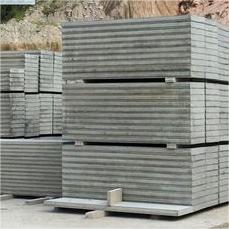
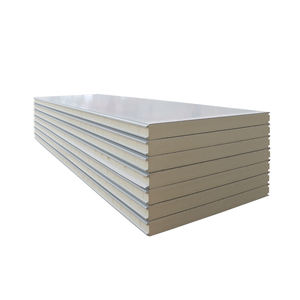
Calcium aluminate concrete (CAC) is a specific building and construction product based upon calcium aluminate concrete (CAC), which varies basically from ordinary Rose city concrete (OPC) in both composition and efficiency.
The primary binding stage in CAC is monocalcium aluminate (CaO · Al ₂ O Six or CA), usually constituting 40– 60% of the clinker, together with other stages such as dodecacalcium hepta-aluminate (C ₁₂ A ₇), calcium dialuminate (CA ₂), and minor quantities of tetracalcium trialuminate sulfate (C ₄ AS).
These stages are created by integrating high-purity bauxite (aluminum-rich ore) and sedimentary rock in electrical arc or rotating kilns at temperature levels in between 1300 ° C and 1600 ° C, causing a clinker that is ultimately ground right into a fine powder.
Making use of bauxite makes certain a high aluminum oxide (Al ₂ O THREE) web content– usually between 35% and 80%– which is essential for the material’s refractory and chemical resistance homes.
Unlike OPC, which counts on calcium silicate hydrates (C-S-H) for stamina advancement, CAC gains its mechanical residential properties through the hydration of calcium aluminate phases, forming a distinctive collection of hydrates with remarkable performance in hostile settings.
1.2 Hydration Device and Toughness Growth
The hydration of calcium aluminate concrete is a complex, temperature-sensitive process that causes the development of metastable and steady hydrates in time.
At temperature levels below 20 ° C, CA moistens to create CAH ₁₀ (calcium aluminate decahydrate) and C ₂ AH EIGHT (dicalcium aluminate octahydrate), which are metastable phases that supply rapid early strength– frequently attaining 50 MPa within 1 day.
Nonetheless, at temperature levels over 25– 30 ° C, these metastable hydrates undertake a transformation to the thermodynamically steady phase, C TWO AH ₆ (hydrogarnet), and amorphous light weight aluminum hydroxide (AH TWO), a procedure referred to as conversion.
This conversion lowers the strong volume of the hydrated stages, boosting porosity and potentially damaging the concrete otherwise appropriately handled throughout healing and service.
The price and level of conversion are affected by water-to-cement ratio, healing temperature level, and the visibility of ingredients such as silica fume or microsilica, which can alleviate toughness loss by refining pore framework and promoting secondary responses.
Regardless of the threat of conversion, the rapid strength gain and very early demolding capability make CAC perfect for precast aspects and emergency repairs in industrial settings.
( Calcium Aluminate Concrete)
2. Physical and Mechanical Qualities Under Extreme Issues
2.1 High-Temperature Performance and Refractoriness
Among one of the most defining qualities of calcium aluminate concrete is its capacity to withstand severe thermal conditions, making it a preferred option for refractory linings in industrial heating systems, kilns, and burners.
When heated up, CAC undertakes a series of dehydration and sintering reactions: hydrates disintegrate between 100 ° C and 300 ° C, complied with by the formation of intermediate crystalline stages such as CA two and melilite (gehlenite) over 1000 ° C.
At temperatures exceeding 1300 ° C, a dense ceramic structure kinds through liquid-phase sintering, causing significant toughness recovery and quantity stability.
This habits contrasts sharply with OPC-based concrete, which generally spalls or breaks down above 300 ° C due to heavy steam pressure accumulation and decay of C-S-H stages.
CAC-based concretes can sustain continual service temperatures up to 1400 ° C, relying on aggregate kind and formulation, and are usually made use of in mix with refractory accumulations like calcined bauxite, chamotte, or mullite to boost thermal shock resistance.
2.2 Resistance to Chemical Assault and Rust
Calcium aluminate concrete exhibits exceptional resistance to a variety of chemical environments, especially acidic and sulfate-rich conditions where OPC would rapidly degrade.
The moisturized aluminate stages are extra steady in low-pH environments, allowing CAC to stand up to acid strike from sources such as sulfuric, hydrochloric, and natural acids– usual in wastewater treatment plants, chemical processing facilities, and mining operations.
It is additionally very resistant to sulfate attack, a major root cause of OPC concrete deterioration in soils and marine settings, because of the absence of calcium hydroxide (portlandite) and ettringite-forming phases.
Furthermore, CAC shows reduced solubility in salt water and resistance to chloride ion infiltration, minimizing the danger of support deterioration in aggressive marine setups.
These homes make it appropriate for cellular linings in biogas digesters, pulp and paper sector tanks, and flue gas desulfurization units where both chemical and thermal tensions are present.
3. Microstructure and Resilience Qualities
3.1 Pore Framework and Permeability
The sturdiness of calcium aluminate concrete is carefully linked to its microstructure, especially its pore dimension circulation and connection.
Freshly moisturized CAC exhibits a finer pore framework contrasted to OPC, with gel pores and capillary pores adding to reduced leaks in the structure and improved resistance to aggressive ion access.
However, as conversion proceeds, the coarsening of pore framework as a result of the densification of C SIX AH ₆ can boost leaks in the structure if the concrete is not correctly treated or shielded.
The addition of reactive aluminosilicate products, such as fly ash or metakaolin, can improve long-term resilience by taking in complimentary lime and creating supplementary calcium aluminosilicate hydrate (C-A-S-H) phases that improve the microstructure.
Appropriate treating– particularly moist healing at regulated temperature levels– is necessary to postpone conversion and permit the growth of a thick, impermeable matrix.
3.2 Thermal Shock and Spalling Resistance
Thermal shock resistance is a vital efficiency statistics for materials made use of in cyclic home heating and cooling settings.
Calcium aluminate concrete, specifically when formulated with low-cement material and high refractory aggregate quantity, shows excellent resistance to thermal spalling because of its low coefficient of thermal growth and high thermal conductivity about various other refractory concretes.
The existence of microcracks and interconnected porosity allows for stress and anxiety leisure throughout quick temperature adjustments, preventing catastrophic fracture.
Fiber reinforcement– utilizing steel, polypropylene, or lava fibers– additional boosts durability and split resistance, especially during the first heat-up stage of industrial cellular linings.
These functions guarantee lengthy life span in applications such as ladle cellular linings in steelmaking, rotary kilns in cement production, and petrochemical crackers.
4. Industrial Applications and Future Development Trends
4.1 Trick Industries and Structural Makes Use Of
Calcium aluminate concrete is vital in markets where conventional concrete fails due to thermal or chemical direct exposure.
In the steel and foundry sectors, it is utilized for monolithic cellular linings in ladles, tundishes, and saturating pits, where it withstands molten steel get in touch with and thermal cycling.
In waste incineration plants, CAC-based refractory castables secure boiler walls from acidic flue gases and abrasive fly ash at elevated temperature levels.
Community wastewater facilities employs CAC for manholes, pump stations, and drain pipelines exposed to biogenic sulfuric acid, substantially prolonging life span contrasted to OPC.
It is also utilized in quick repair service systems for highways, bridges, and flight terminal paths, where its fast-setting nature enables same-day reopening to web traffic.
4.2 Sustainability and Advanced Formulations
Regardless of its performance benefits, the manufacturing of calcium aluminate concrete is energy-intensive and has a higher carbon impact than OPC because of high-temperature clinkering.
Continuous research concentrates on lowering ecological influence with partial replacement with commercial byproducts, such as aluminum dross or slag, and enhancing kiln performance.
New formulations including nanomaterials, such as nano-alumina or carbon nanotubes, goal to enhance very early strength, reduce conversion-related degradation, and prolong service temperature level restrictions.
In addition, the development of low-cement and ultra-low-cement refractory castables (ULCCs) improves density, stamina, and durability by reducing the amount of reactive matrix while making the most of aggregate interlock.
As commercial procedures demand ever before more resilient materials, calcium aluminate concrete continues to advance as a cornerstone of high-performance, durable construction in the most difficult environments.
In recap, calcium aluminate concrete combines quick strength development, high-temperature security, and superior chemical resistance, making it an important material for framework based on severe thermal and destructive problems.
Its unique hydration chemistry and microstructural development need mindful handling and style, however when appropriately used, it supplies unrivaled durability and safety in commercial applications worldwide.
5. Vendor
Cabr-Concrete is a supplier under TRUNNANO of Calcium Aluminate Cement with over 12 years of experience in nano-building energy conservation and nanotechnology development. It accepts payment via Credit Card, T/T, West Union and Paypal. TRUNNANO will ship the goods to customers overseas through FedEx, DHL, by air, or by sea. If you are looking for aluminatzement, please feel free to contact us and send an inquiry. ( Tags: calcium aluminate,calcium aluminate,aluminate cement
All articles and pictures are from the Internet. If there are any copyright issues, please contact us in time to delete.
Inquiry us

Leave a Reply
You must be logged in to post a comment.