If you are looking for high-quality products, please feel free to contact us and send an inquiry, email: brad@ihpa.net
1. Essential Chemistry and Crystallographic Design of Boron Carbide
1.1 Molecular Make-up and Architectural Intricacy

(Boron Carbide Ceramic)
Boron carbide (B ₄ C) stands as one of one of the most interesting and technologically crucial ceramic products because of its one-of-a-kind combination of severe solidity, low density, and exceptional neutron absorption capacity.
Chemically, it is a non-stoichiometric compound mainly composed of boron and carbon atoms, with an idyllic formula of B ₄ C, though its real structure can range from B ₄ C to B ₁₀. FIVE C, mirroring a wide homogeneity range controlled by the replacement mechanisms within its complicated crystal lattice.
The crystal structure of boron carbide comes from the rhombohedral system (space group R3̄m), characterized by a three-dimensional network of 12-atom icosahedra– collections of boron atoms– connected by straight C-B-C or C-C chains along the trigonal axis.
These icosahedra, each including 11 boron atoms and 1 carbon atom (B ₁₁ C), are covalently bonded through incredibly solid B– B, B– C, and C– C bonds, contributing to its exceptional mechanical strength and thermal security.
The existence of these polyhedral units and interstitial chains presents structural anisotropy and inherent issues, which affect both the mechanical habits and electronic residential properties of the product.
Unlike less complex porcelains such as alumina or silicon carbide, boron carbide’s atomic style enables considerable configurational adaptability, enabling flaw formation and cost circulation that influence its performance under stress and anxiety and irradiation.
1.2 Physical and Digital Residences Occurring from Atomic Bonding
The covalent bonding network in boron carbide causes one of the greatest recognized firmness values amongst synthetic materials– second only to diamond and cubic boron nitride– generally varying from 30 to 38 Grade point average on the Vickers hardness range.
Its thickness is remarkably reduced (~ 2.52 g/cm ³), making it roughly 30% lighter than alumina and almost 70% lighter than steel, a crucial benefit in weight-sensitive applications such as individual armor and aerospace parts.
Boron carbide exhibits exceptional chemical inertness, standing up to strike by many acids and antacids at area temperature level, although it can oxidize above 450 ° C in air, forming boric oxide (B TWO O TWO) and co2, which might compromise architectural stability in high-temperature oxidative environments.
It possesses a large bandgap (~ 2.1 eV), classifying it as a semiconductor with potential applications in high-temperature electronics and radiation detectors.
In addition, its high Seebeck coefficient and low thermal conductivity make it a prospect for thermoelectric power conversion, particularly in extreme atmospheres where traditional products stop working.
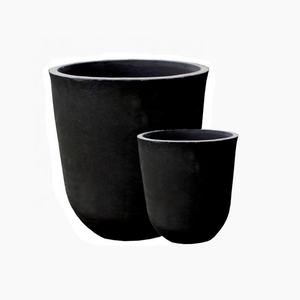
(Boron Carbide Ceramic)
The material also demonstrates phenomenal neutron absorption as a result of the high neutron capture cross-section of the ¹⁰ B isotope (approximately 3837 barns for thermal neutrons), rendering it indispensable in nuclear reactor control rods, securing, and invested gas storage systems.
2. Synthesis, Processing, and Challenges in Densification
2.1 Industrial Production and Powder Fabrication Techniques
Boron carbide is largely created via high-temperature carbothermal decrease of boric acid (H TWO BO FIVE) or boron oxide (B TWO O SIX) with carbon sources such as oil coke or charcoal in electrical arc heaters operating above 2000 ° C.
The response proceeds as: 2B ₂ O TWO + 7C → B FOUR C + 6CO, producing coarse, angular powders that call for comprehensive milling to attain submicron fragment dimensions suitable for ceramic handling.
Alternative synthesis courses include self-propagating high-temperature synthesis (SHS), laser-induced chemical vapor deposition (CVD), and plasma-assisted approaches, which provide far better control over stoichiometry and particle morphology but are less scalable for industrial usage.
Due to its severe solidity, grinding boron carbide right into fine powders is energy-intensive and vulnerable to contamination from milling media, demanding making use of boron carbide-lined mills or polymeric grinding aids to protect purity.
The resulting powders have to be thoroughly classified and deagglomerated to make sure uniform packaging and effective sintering.
2.2 Sintering Limitations and Advanced Loan Consolidation Methods
A significant obstacle in boron carbide ceramic fabrication is its covalent bonding nature and reduced self-diffusion coefficient, which drastically limit densification throughout standard pressureless sintering.
Also at temperature levels coming close to 2200 ° C, pressureless sintering generally yields porcelains with 80– 90% of theoretical density, leaving recurring porosity that breaks down mechanical stamina and ballistic efficiency.
To conquer this, advanced densification methods such as hot pressing (HP) and warm isostatic pushing (HIP) are used.
Warm pressing uses uniaxial pressure (generally 30– 50 MPa) at temperatures between 2100 ° C and 2300 ° C, advertising fragment rearrangement and plastic contortion, making it possible for densities surpassing 95%.
HIP better improves densification by using isostatic gas pressure (100– 200 MPa) after encapsulation, eliminating shut pores and accomplishing near-full density with boosted crack sturdiness.
Additives such as carbon, silicon, or transition steel borides (e.g., TiB ₂, CrB TWO) are occasionally introduced in small amounts to improve sinterability and hinder grain development, though they may slightly decrease hardness or neutron absorption effectiveness.
Regardless of these developments, grain border weak point and inherent brittleness stay consistent challenges, especially under vibrant loading problems.
3. Mechanical Behavior and Efficiency Under Extreme Loading Issues
3.1 Ballistic Resistance and Failure Systems
Boron carbide is widely recognized as a premier product for lightweight ballistic protection in body shield, lorry plating, and aircraft protecting.
Its high solidity allows it to successfully deteriorate and deform incoming projectiles such as armor-piercing bullets and fragments, dissipating kinetic power through mechanisms including crack, microcracking, and localized stage makeover.
Nonetheless, boron carbide exhibits a sensation known as “amorphization under shock,” where, under high-velocity impact (commonly > 1.8 km/s), the crystalline framework falls down into a disordered, amorphous stage that does not have load-bearing ability, leading to disastrous failing.
This pressure-induced amorphization, observed by means of in-situ X-ray diffraction and TEM studies, is credited to the malfunction of icosahedral devices and C-B-C chains under severe shear tension.
Initiatives to reduce this include grain improvement, composite design (e.g., B ₄ C-SiC), and surface area finishing with ductile steels to postpone split breeding and contain fragmentation.
3.2 Use Resistance and Commercial Applications
Past protection, boron carbide’s abrasion resistance makes it optimal for commercial applications involving serious wear, such as sandblasting nozzles, water jet reducing ideas, and grinding media.
Its firmness considerably surpasses that of tungsten carbide and alumina, causing extensive life span and reduced maintenance expenses in high-throughput manufacturing atmospheres.
Parts made from boron carbide can run under high-pressure unpleasant circulations without rapid degradation, although care must be taken to avoid thermal shock and tensile stresses throughout procedure.
Its use in nuclear atmospheres also reaches wear-resistant elements in fuel handling systems, where mechanical sturdiness and neutron absorption are both required.
4. Strategic Applications in Nuclear, Aerospace, and Arising Technologies
4.1 Neutron Absorption and Radiation Shielding Equipments
Among one of the most crucial non-military applications of boron carbide is in nuclear energy, where it acts as a neutron-absorbing product in control poles, closure pellets, and radiation protecting structures.
Due to the high wealth of the ¹⁰ B isotope (naturally ~ 20%, yet can be improved to > 90%), boron carbide effectively catches thermal neutrons through the ¹⁰ B(n, α)⁷ Li response, creating alpha particles and lithium ions that are quickly consisted of within the product.
This response is non-radioactive and creates very little long-lived by-products, making boron carbide more secure and a lot more stable than options like cadmium or hafnium.
It is used in pressurized water activators (PWRs), boiling water activators (BWRs), and research activators, frequently in the form of sintered pellets, clad tubes, or composite panels.
Its security under neutron irradiation and capacity to preserve fission items enhance reactor safety and operational long life.
4.2 Aerospace, Thermoelectrics, and Future Product Frontiers
In aerospace, boron carbide is being checked out for usage in hypersonic car leading edges, where its high melting point (~ 2450 ° C), low density, and thermal shock resistance offer advantages over metallic alloys.
Its capacity in thermoelectric devices stems from its high Seebeck coefficient and low thermal conductivity, enabling straight conversion of waste warm right into electrical energy in extreme environments such as deep-space probes or nuclear-powered systems.
Research is likewise underway to establish boron carbide-based composites with carbon nanotubes or graphene to improve sturdiness and electric conductivity for multifunctional architectural electronic devices.
Additionally, its semiconductor homes are being leveraged in radiation-hardened sensing units and detectors for space and nuclear applications.
In summary, boron carbide ceramics stand for a foundation material at the junction of severe mechanical efficiency, nuclear engineering, and progressed manufacturing.
Its special mix of ultra-high firmness, reduced density, and neutron absorption capacity makes it irreplaceable in protection and nuclear technologies, while ongoing research continues to increase its energy right into aerospace, energy conversion, and next-generation composites.
As processing methods improve and new composite designs emerge, boron carbide will stay at the leading edge of products development for the most requiring technical obstacles.
5. Distributor
Advanced Ceramics founded on October 17, 2012, is a high-tech enterprise committed to the research and development, production, processing, sales and technical services of ceramic relative materials and products. Our products includes but not limited to Boron Carbide Ceramic Products, Boron Nitride Ceramic Products, Silicon Carbide Ceramic Products, Silicon Nitride Ceramic Products, Zirconium Dioxide Ceramic Products, etc. If you are interested, please feel free to contact us.(nanotrun@yahoo.com) Tags: Boron Carbide, Boron Ceramic, Boron Carbide Ceramic
All articles and pictures are from the Internet. If there are any copyright issues, please contact us in time to delete.
Inquiry us
Leave a Reply
You must be logged in to post a comment.