If you are looking for high-quality products, please feel free to contact us and send an inquiry, email: brad@ihpa.net
1. Crystallography and Polymorphism of Titanium Dioxide
1.1 Anatase, Rutile, and Brookite: Structural and Electronic Distinctions
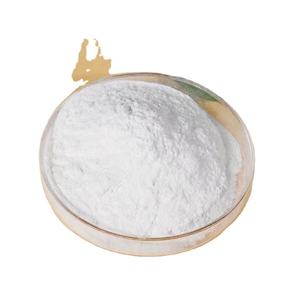
( Titanium Dioxide)
Titanium dioxide (TiO ₂) is a normally occurring metal oxide that exists in 3 primary crystalline kinds: rutile, anatase, and brookite, each showing distinctive atomic arrangements and digital residential or commercial properties regardless of sharing the same chemical formula.
Rutile, the most thermodynamically secure phase, includes a tetragonal crystal structure where titanium atoms are octahedrally coordinated by oxygen atoms in a dense, straight chain configuration along the c-axis, causing high refractive index and excellent chemical security.
Anatase, likewise tetragonal yet with an extra open structure, possesses edge- and edge-sharing TiO six octahedra, resulting in a greater surface area power and better photocatalytic task because of boosted cost service provider movement and lowered electron-hole recombination prices.
Brookite, the least common and most challenging to manufacture phase, adopts an orthorhombic structure with complex octahedral tilting, and while much less examined, it reveals intermediate homes in between anatase and rutile with emerging rate of interest in hybrid systems.
The bandgap powers of these phases differ somewhat: rutile has a bandgap of approximately 3.0 eV, anatase around 3.2 eV, and brookite concerning 3.3 eV, affecting their light absorption characteristics and suitability for particular photochemical applications.
Phase stability is temperature-dependent; anatase commonly changes irreversibly to rutile above 600– 800 ° C, a change that has to be regulated in high-temperature processing to preserve wanted functional properties.
1.2 Issue Chemistry and Doping Methods
The practical versatility of TiO ₂ arises not just from its intrinsic crystallography yet additionally from its ability to accommodate point problems and dopants that change its digital structure.
Oxygen vacancies and titanium interstitials work as n-type contributors, increasing electric conductivity and producing mid-gap states that can affect optical absorption and catalytic activity.
Controlled doping with steel cations (e.g., Fe ³ ⁺, Cr Two ⁺, V ⁴ ⁺) or non-metal anions (e.g., N, S, C) tightens the bandgap by introducing pollutant levels, making it possible for visible-light activation– an important development for solar-driven applications.
For instance, nitrogen doping changes lattice oxygen websites, developing localized states above the valence band that allow excitation by photons with wavelengths approximately 550 nm, considerably increasing the useful part of the solar range.
These modifications are important for getting rid of TiO ₂’s key restriction: its vast bandgap limits photoactivity to the ultraviolet region, which comprises just around 4– 5% of event sunlight.
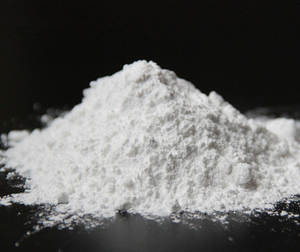
( Titanium Dioxide)
2. Synthesis Techniques and Morphological Control
2.1 Standard and Advanced Fabrication Techniques
Titanium dioxide can be synthesized through a range of methods, each using different degrees of control over phase pureness, bit size, and morphology.
The sulfate and chloride (chlorination) procedures are large commercial paths utilized mostly for pigment manufacturing, including the digestion of ilmenite or titanium slag adhered to by hydrolysis or oxidation to generate fine TiO ₂ powders.
For functional applications, wet-chemical approaches such as sol-gel processing, hydrothermal synthesis, and solvothermal routes are liked due to their capacity to create nanostructured products with high surface and tunable crystallinity.
Sol-gel synthesis, beginning with titanium alkoxides like titanium isopropoxide, allows precise stoichiometric control and the formation of thin movies, monoliths, or nanoparticles through hydrolysis and polycondensation reactions.
Hydrothermal approaches enable the development of well-defined nanostructures– such as nanotubes, nanorods, and hierarchical microspheres– by regulating temperature level, pressure, and pH in liquid environments, frequently using mineralizers like NaOH to advertise anisotropic growth.
2.2 Nanostructuring and Heterojunction Design
The performance of TiO ₂ in photocatalysis and energy conversion is very depending on morphology.
One-dimensional nanostructures, such as nanotubes created by anodization of titanium metal, supply direct electron transport pathways and large surface-to-volume proportions, enhancing cost splitting up effectiveness.
Two-dimensional nanosheets, specifically those subjecting high-energy 001 facets in anatase, show remarkable reactivity due to a higher thickness of undercoordinated titanium atoms that act as active sites for redox reactions.
To additionally improve performance, TiO ₂ is typically incorporated right into heterojunction systems with various other semiconductors (e.g., g-C ₃ N FOUR, CdS, WO SIX) or conductive assistances like graphene and carbon nanotubes.
These composites assist in spatial separation of photogenerated electrons and holes, lower recombination losses, and expand light absorption right into the visible variety with sensitization or band placement impacts.
3. Useful Residences and Surface Sensitivity
3.1 Photocatalytic Mechanisms and Environmental Applications
One of the most celebrated property of TiO two is its photocatalytic activity under UV irradiation, which makes it possible for the deterioration of organic contaminants, microbial inactivation, and air and water filtration.
Upon photon absorption, electrons are thrilled from the valence band to the transmission band, leaving holes that are effective oxidizing representatives.
These cost service providers respond with surface-adsorbed water and oxygen to produce reactive oxygen species (ROS) such as hydroxyl radicals (- OH), superoxide anions (- O TWO ⁻), and hydrogen peroxide (H ₂ O ₂), which non-selectively oxidize organic contaminants right into CO ₂, H ₂ O, and mineral acids.
This mechanism is exploited in self-cleaning surface areas, where TiO TWO-layered glass or ceramic tiles damage down organic dirt and biofilms under sunshine, and in wastewater therapy systems targeting dyes, drugs, and endocrine disruptors.
Furthermore, TiO TWO-based photocatalysts are being created for air filtration, removing volatile natural compounds (VOCs) and nitrogen oxides (NOₓ) from indoor and metropolitan environments.
3.2 Optical Spreading and Pigment Capability
Beyond its responsive homes, TiO two is the most extensively utilized white pigment in the world due to its outstanding refractive index (~ 2.7 for rutile), which makes it possible for high opacity and brightness in paints, finishings, plastics, paper, and cosmetics.
The pigment features by scattering noticeable light successfully; when fragment dimension is maximized to roughly half the wavelength of light (~ 200– 300 nm), Mie spreading is optimized, causing premium hiding power.
Surface area treatments with silica, alumina, or natural coatings are put on improve dispersion, decrease photocatalytic task (to avoid deterioration of the host matrix), and boost longevity in outside applications.
In sunscreens, nano-sized TiO ₂ gives broad-spectrum UV security by scattering and soaking up unsafe UVA and UVB radiation while staying transparent in the visible range, supplying a physical obstacle without the threats related to some natural UV filters.
4. Emerging Applications in Power and Smart Products
4.1 Function in Solar Power Conversion and Storage Space
Titanium dioxide plays an essential role in renewable energy technologies, most notably in dye-sensitized solar cells (DSSCs) and perovskite solar batteries (PSCs).
In DSSCs, a mesoporous movie of nanocrystalline anatase works as an electron-transport layer, accepting photoexcited electrons from a color sensitizer and performing them to the exterior circuit, while its vast bandgap makes certain very little parasitical absorption.
In PSCs, TiO ₂ acts as the electron-selective get in touch with, facilitating charge extraction and boosting gadget security, although study is ongoing to replace it with less photoactive alternatives to improve long life.
TiO two is likewise checked out in photoelectrochemical (PEC) water splitting systems, where it operates as a photoanode to oxidize water into oxygen, protons, and electrons under UV light, adding to green hydrogen manufacturing.
4.2 Assimilation into Smart Coatings and Biomedical Gadgets
Innovative applications include smart windows with self-cleaning and anti-fogging abilities, where TiO ₂ coatings reply to light and humidity to keep openness and hygiene.
In biomedicine, TiO ₂ is checked out for biosensing, medicine delivery, and antimicrobial implants due to its biocompatibility, security, and photo-triggered reactivity.
For instance, TiO ₂ nanotubes grown on titanium implants can advertise osteointegration while offering localized antibacterial action under light exposure.
In summary, titanium dioxide exemplifies the merging of essential materials science with practical technological innovation.
Its unique mix of optical, digital, and surface area chemical properties allows applications ranging from everyday customer products to innovative environmental and power systems.
As study advancements in nanostructuring, doping, and composite style, TiO ₂ remains to evolve as a cornerstone material in lasting and clever modern technologies.
5. Vendor
RBOSCHCO is a trusted global chemical material supplier & manufacturer with over 12 years experience in providing super high-quality chemicals and Nanomaterials. The company export to many countries, such as USA, Canada, Europe, UAE, South Africa, Tanzania, Kenya, Egypt, Nigeria, Cameroon, Uganda, Turkey, Mexico, Azerbaijan, Belgium, Cyprus, Czech Republic, Brazil, Chile, Argentina, Dubai, Japan, Korea, Vietnam, Thailand, Malaysia, Indonesia, Australia,Germany, France, Italy, Portugal etc. As a leading nanotechnology development manufacturer, RBOSCHCO dominates the market. Our professional work team provides perfect solutions to help improve the efficiency of various industries, create value, and easily cope with various challenges. If you are looking for titanium dioxide bad, please send an email to: sales1@rboschco.com Tags: titanium dioxide,titanium titanium dioxide, TiO2
All articles and pictures are from the Internet. If there are any copyright issues, please contact us in time to delete.
Inquiry us
Leave a Reply
You must be logged in to post a comment.